13 min · 13 chaptersNarrated in your voice
Original summary · AI-drafted, human-published · added by Library
What it's about
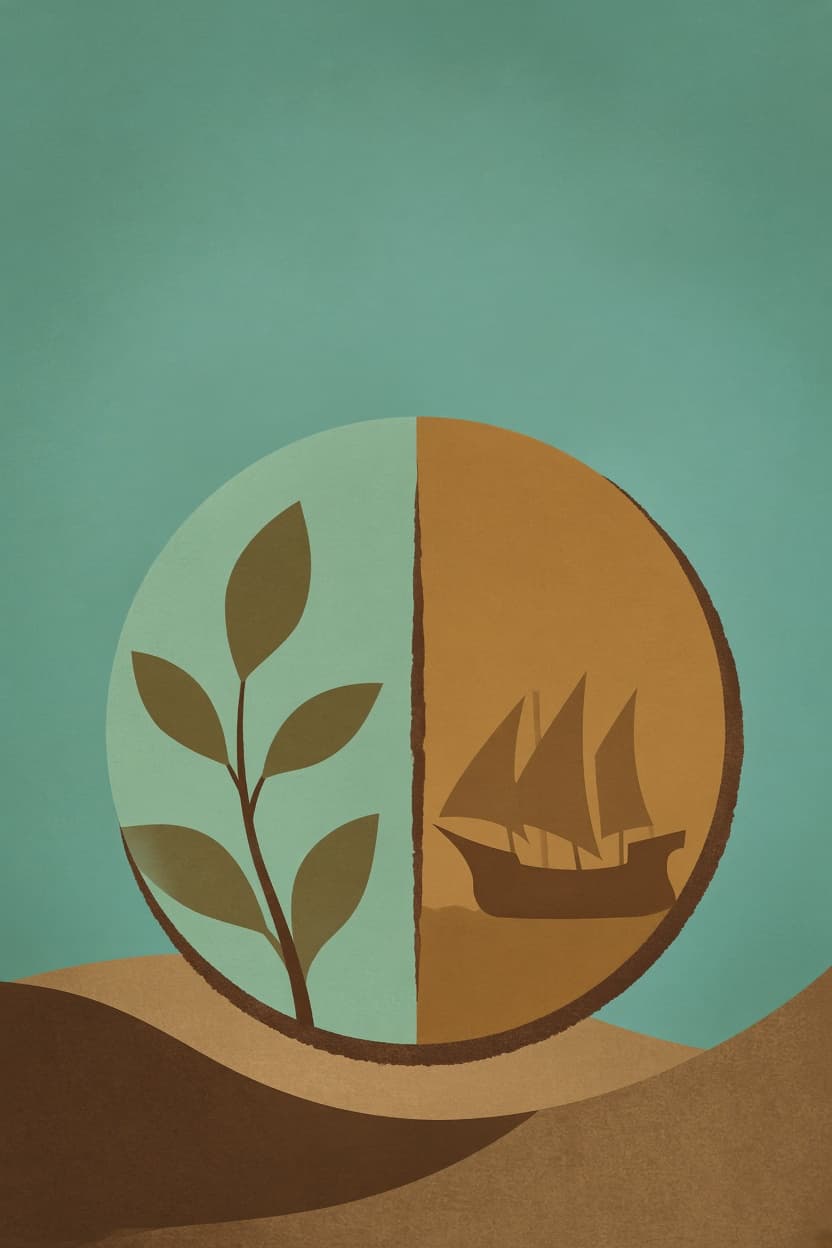
Mann argues that Columbus's 1492 voyage did more than connect two hemispheres politically: it fused two long-separated biological worlds into one, unleashing exchanges of crops, animals, diseases, and people that reshaped every continent. Silver from the Andes financed the Ming economy, American crops fed European and Chinese population booms, and disease ecology helped drive the African slave trade. The book reframes globalization as a five-century-old ecological event, not a late-twentieth-century invention.
Reading plan
Pick a finish date and Genius lays out the days — the plan shows today's target and keeps you honest.
Read together
Start a circle and share the code — everyone sees everyone's honest place in the book. Accountability, not leaderboards.
Who it's for
- Readers of world history who want to see globalization's roots before the internet or steamship - Anyone curious how a Bolivian silver mountain ended up shaping Ming dynasty currency policy - People who want a less triumphalist, more ecological account of Columbus's legacy
What’s inside
- 1The Homogenocene1 min
Mann argues that 1492 did not just link two continents politically but merged the planet's separate ecosystems into a single new biological era he calls the Homogenocene.
- 2Silver and the First Global Economy1 min
The discovery of silver at Potosí, not gold, created history's first genuinely global economy by binding Spanish America directly to Ming China's currency needs.
- 3Tobacco and the Invention of the Plantation1 min
Tobacco's addictive appeal, more than English colonial planning, rescued Jamestown and established the plantation model built on captive labor.
- 4Malaria, Yellow Fever, and the Logic Planters Used1 min
Differential immunity to malaria and yellow fever gave slaveholders a brutal biological argument for preferring enslaved Africans over European laborers, reinforcing the slave trade's expansion.
- 5Sugar and Ecological Devastation1 min
The sugar plantation model, first perfected on Atlantic islands like São Tomé, generated immense wealth alongside near-total ecological destruction wherever it was replicated.
- 6The Potato and Europe's Population Revolution1 min
The potato's move from the Andes to Europe broke a centuries-old ceiling on population growth, but the resulting monoculture proved catastrophically fragile.
- 7Rubber and the Limits of Transplantation1 min
Rubber's history shows that ecological transplants succeed commercially only when the pests and pathogens of the original habitat are left behind.
- 8Maize, Sweet Potatoes, and Strain on China1 min
American crops fueled a massive Chinese population boom under the Qing dynasty by opening marginal hill lands to farming, but the same expansion caused deforestation that undermined imperial stability.
- 9Earthworms, Weeds, and the Remaking of Landscapes1 min
Unremarkable organisms, especially European earthworms and weeds, transformed American ecosystems as thoroughly as any human settlement effort.
- 10Manila and the First Global City1 min
Manila, as the hub of the transpacific galleon trade, became the world's first genuinely global city, where Spanish, Chinese, Filipino, and Mexican populations mixed under the pressure of the silver economy.
About Charles C. Mann
Charles C. Mann is an American journalist and correspondent for Science, The Atlantic, and Wired. He is best known for 1491, a reexamination of pre-Columbian America, and for science reporting spanning genetics, archaeology, and environmental policy. He is not a credentialed historian but a synthesizer who works closely with academic specialists across disciplines.
What readers say
Read next

At HomeBill BrysonSummary11 min
Helter SkelterVincent Bugliosi and Curt GentrySummary14 min

1491Charles C. MannSummary11 min

A Distant MirrorBarbara W. TuchmanSummary11 min

The Great InfluenzaJohn M. BarrySummary9 min
The Rise and Fall of the Third ReichWilliam L. ShirerSummary14 min