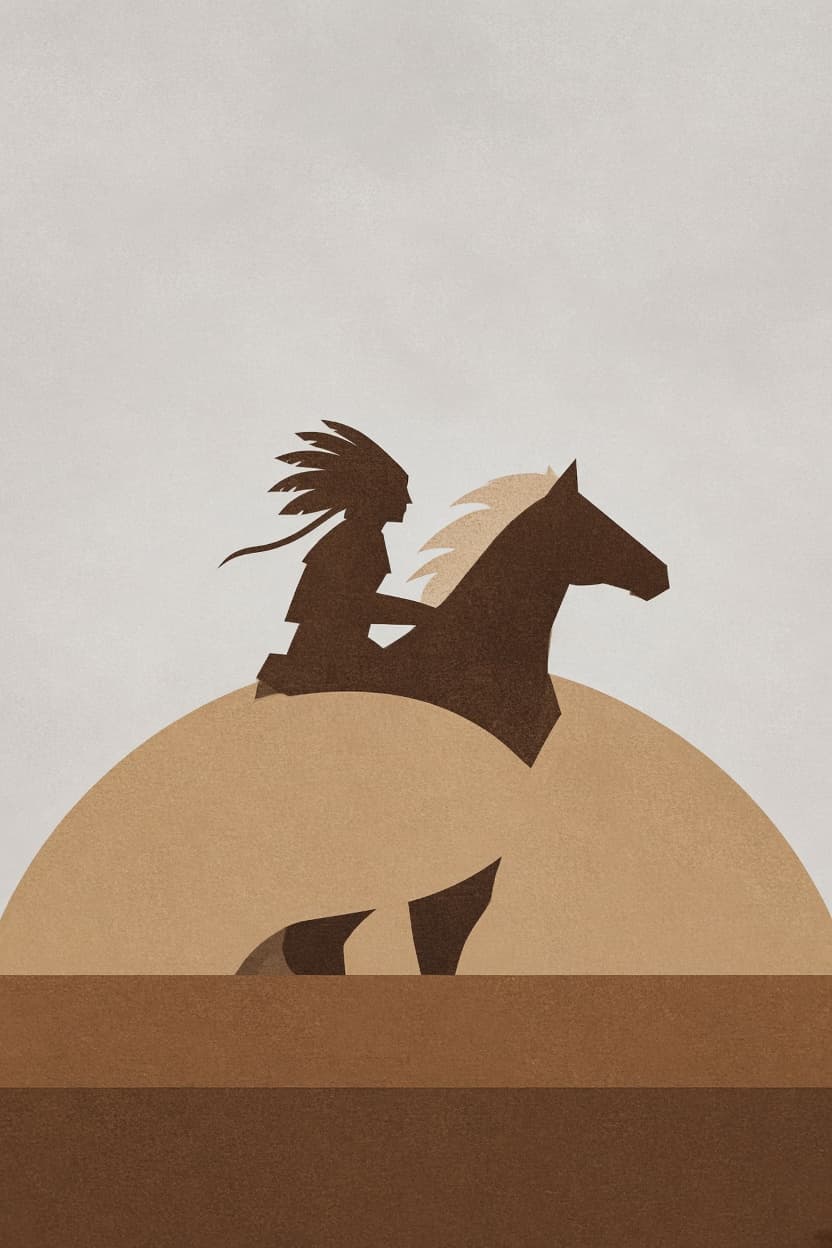
Empire of the Summer Moon
Quanah Parker and the Rise and Fall of the Comanches, the Most Powerful Indian Tribe in American History
S. C. Gwynne · 2010 · History
12 min · 12 chaptersNarrated in your voice
Original summary · AI-drafted, human-published · added by Library
What it's about
Gwynne argues that the Comanches, once they mastered the horse, became the most formidable light-cavalry force in the Americas and held back Anglo-American expansion for forty years longer than any other tribe. Weaving the story of Cynthia Ann Parker and her son Quanah through the tribe's rise and destruction, the book argues that the closing of the frontier was less an inevitable march of civilization than a brutal, close-run contest decided by repeating firearms, disease, and the extermination of the buffalo.
Reading plan
Pick a finish date and Genius lays out the days — the plan shows today's target and keeps you honest.
Read together
Start a circle and share the code — everyone sees everyone's honest place in the book. Accountability, not leaderboards.
Who it's for
- Readers of narrative history who want a character-driven account rather than a dry survey of Indian wars - Texans and Southwesterners curious about the specific tribes and battles that shaped their regional history - General readers interested in how technology, ecology, and captivity narratives intersected in the settling of the American West
What’s inside
- 1The Horse Changes Everything1 min
The Comanches became history's preeminent example of how a single technology, the horse, can transform a marginal people into a dominant military power within a few generations.
- 2A Raid on Parker's Fort1 min
The 1836 raid that took Cynthia Ann Parker captive shows that Comanche warfare was not random savagery but a calculated system for acquiring people, horses, and status.
- 3The Machinery of Terror1 min
Comanche violence, including ritualized torture and mutilation, functioned as calculated psychological warfare designed to terrify enemies into retreat rather than as uncontrolled cruelty.
- 4The Colt Revolver Tips the Balance1 min
The single-shot rifle era gave Comanche horsemen a decisive tactical edge, and it took a specific new weapon, the repeating revolver, to finally close that gap.
- 5Buffalo, Disease, and the Long Attrition1 min
The Comanches were defeated less by battlefield losses than by the systematic destruction of their economic base, the buffalo herds, and by epidemic disease introduced from outside.
- 6Quanah's Rise and the Red River War1 min
Quanah Parker's emergence as a war leader in the final Comanche resistance shows that even the most skilled leadership could not overcome a foe attacking the tribe's food supply and population base simultaneously.
- 7Reinvention on the Reservation1 min
Quanah Parker's later success as a reservation leader and businessman demonstrates that adaptation, not resistance, became the only viable path for Comanche survival after 1875.
- 8Cynthia Ann's Unwanted Rescue1 min
Cynthia Ann Parker's forced return to white society in 1860, against her own wishes, exposes the moral blindness in how Anglo-Americans understood captivity and rescue.
- 9The Closing of the Frontier1 min
The end of Comanche power marks a specific hinge point after which the entire model of an independent, horse-based Plains society became permanently impossible for any tribe.
About S. C. Gwynne
S. C. Gwynne is a journalist and author who spent years as a national correspondent and executive editor at Time magazine and Texas Monthly. Empire of the Summer Moon, published in 2010, was a finalist for the Pulitzer Prize and the National Book Award, and drew on decades of frontier scholarship, captivity narratives, and military records rather than original archival discovery.