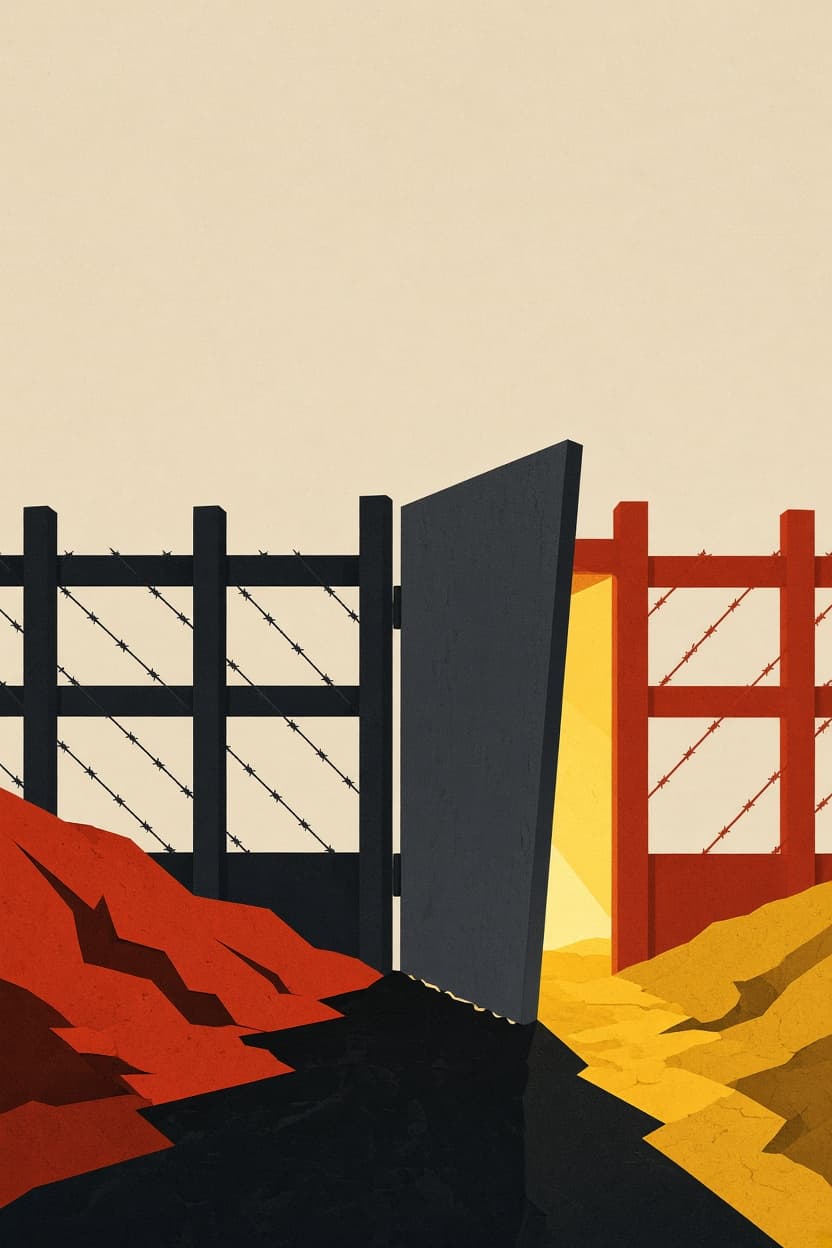
Escape from Camp 14
One Man's Remarkable Odyssey from North Korea to Freedom in the West
Blaine Harden · 2012 · Biography
12 min · 12 chaptersNarrated in your voice
Original summary · AI-drafted, human-published · added by Library
What it's about
Blaine Harden reconstructs the life of Shin Dong-hyuk, the only person known to have been born inside a North Korean political prison camp and escaped to the West. Through years of interviews, Harden argues that the camp system did not just punish Shin's family — it manufactured a person incapable of ordinary love, loyalty, or guilt, and that understanding this psychological damage is essential to understanding what the camps actually do to human beings.
Reading plan
Pick a finish date and Genius lays out the days — the plan shows today's target and keeps you honest.
Read together
Start a circle and share the code — everyone sees everyone's honest place in the book. Accountability, not leaderboards.
Who it's for
- Readers of political history who want to understand North Korea beyond headlines about missiles and dictators - People interested in trauma and how extreme deprivation reshapes a person's capacity for empathy and trust - Human rights advocates or students researching testimony-based evidence of atrocities in closed societies
What’s inside
- 1Born Inside a Fence1 min
North Korea's system of hereditary political prison camps punishes entire bloodlines for generations, making the accident of birth itself a life sentence.
- 2A Family Built by Command1 min
Inside the camp, family relationships are assigned and rationed by guards, which strips them of the trust and tenderness that make family bonds meaningful elsewhere.
- 3Taught to Betray1 min
The camp trained children from an early age to see informing on peers and parents as the safest, most rational path to survival, not as a moral failure.
- 4The Execution1 min
Shin's decision to report his mother and brother's whispered plan to escape shows how completely the camp had replaced ordinary moral feeling with pure survival calculation.
- 5Under Suspicion1 min
Even after informing on his own family, Shin was tortured for months on suspicion of complicity, proving that loyalty to the guards offered no real protection inside the camp.
- 6A Voice From Outside1 min
A single fellow prisoner's stories about ordinary food and freedom beyond the fence were enough to awaken a desire for escape that years of conditioning had never fully erased.
- 7Through the Wire1 min
Shin's escape succeeded because of another man's death and outright luck, not primarily through his own resourcefulness, which complicates any simple hero narrative built around him.
- 8Learning to Be Human1 min
Physical freedom did not resolve Shin's psychological damage, showing that camp conditioning around trust, guilt, and attachment can persist for years after escape.
- 9Evidence From Space1 min
Independent corroboration through satellite imagery and dozens of other defector accounts establishes that North Korea's camp system is real and ongoing, regardless of any single witness's reliability.
About Blaine Harden
Blaine Harden is an American journalist who spent decades reporting for The Washington Post and The New York Times, including years covering East Asia. He interviewed Shin Dong-hyuk extensively over several years to write this book, and later wrote The Great Leader and the Fighter Pilot, another account drawn from North Korean sources.