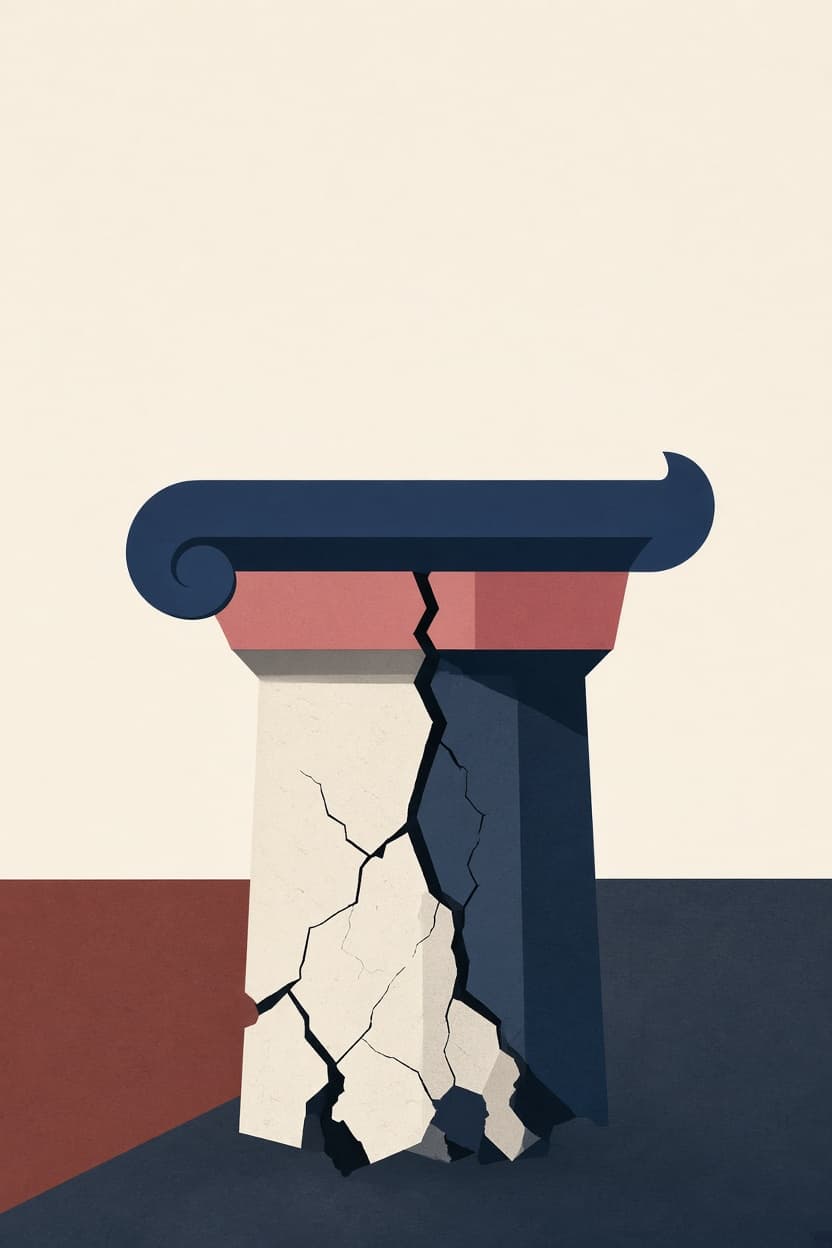
How Democracies Die
What History Reveals About Our Future
Steven Levitsky and Daniel Ziblatt · 2018 · Politics & Society
14 min · 13 chaptersNarrated in your voice
Original summary · AI-drafted, human-published · added by Library
What it's about
Levitsky and Ziblatt argue that modern democracies rarely die in a single violent stroke. They die slowly, at the hands of elected leaders who use legal tools to hollow out institutions, aided by parties and citizens who normalize the abnormal. Drawing on cases from Weimar Germany to Chávez's Venezuela, the book argues that unwritten norms of mutual toleration and restraint, not just constitutions, are what keep democracies alive, and warns that the United States was losing them well before Trump.
Reading plan
Pick a finish date and Genius lays out the days — the plan shows today's target and keeps you honest.
Read together
Start a circle and share the code — everyone sees everyone's honest place in the book. Accountability, not leaderboards.
Who it's for
- A citizen trying to understand why norms, not just laws, hold a democracy together - A political science student comparing 20th-century authoritarian takeovers to recent American politics - A party insider or activist wrestling with when to block a candidate versus respect the vote
What’s inside
- 1Fateful Alliances1 min
Democracies collapse not when radicals seize power alone, but when mainstream politicians invite them in, believing they can be controlled.
- 2The Gatekeepers1 min
For most of American history, demagogues were kept from power not by voters' wisdom but by party elites who filtered them out before nomination.
- 3How to Tell an Authoritarian1 min
A leader's authoritarian intent can be diagnosed in advance using four observable warning signs, before they ever hold power.
- 4The Great Republican Abdication1 min
Trump cleared every warning sign of the authoritarian test during the 2016 primary, and Republican leaders responded by normalizing rather than blocking him.
- 5Subverting Democracy from Within1 min
Contemporary authoritarians consolidate power not by canceling elections but by capturing the referees and rewriting the rules while keeping the appearance of democracy intact.
- 6The Guardrails: Mutual Toleration and Forbearance1 min
Written constitutions only function because of two unwritten norms — accepting rivals as legitimate rather than as enemies, and voluntarily not using every legal power available.
- 7How America Built, and Nearly Lost, Its Guardrails1 min
America's celebrated era of bipartisan comity in the mid-20th century rested in significant part on the exclusion of Black Americans from real political competition.
- 8The Unraveling of Norms1 min
The erosion of American democratic restraint began decades before Trump, driven by a polarization that increasingly treated political rivals as enemies rather than opponents.
- 9Trump Against the Guardrails1 min
The Trump presidency tested institutional forbearance more severely than any modern administration, treating judges, the press, and law enforcement as personal adversaries.
- 10Saving Democracy1 min
Restoring American democracy requires rebuilding a political culture of mutual toleration, not merely defeating one leader or passing new structural rules.
About Steven Levitsky and Daniel Ziblatt
Steven Levitsky and Daniel Ziblatt are professors of government at Harvard University. Levitsky specializes in Latin American politics and competitive authoritarianism; Ziblatt studies the historical development of democracy in Europe. Their comparative research on regime breakdown, spanning decades and continents, informs the book's central warning about the fragility of democratic norms.
What readers say
Read next

Dark MoneyJane MayerSummary9 min
EvictedMatthew DesmondSummary11 min

Prisoners of GeographyTim MarshallSummary11 min
No Place to HideGlenn GreenwaldSummary10 min
Strangers in Their Own LandArlie Russell HochschildSummary10 min
Manufacturing ConsentEdward S. Herman and Noam ChomskySummary14 min