13 min · 12 chaptersNarrated in your voice
Original summary · AI-drafted, human-published · added by Library
What it's about
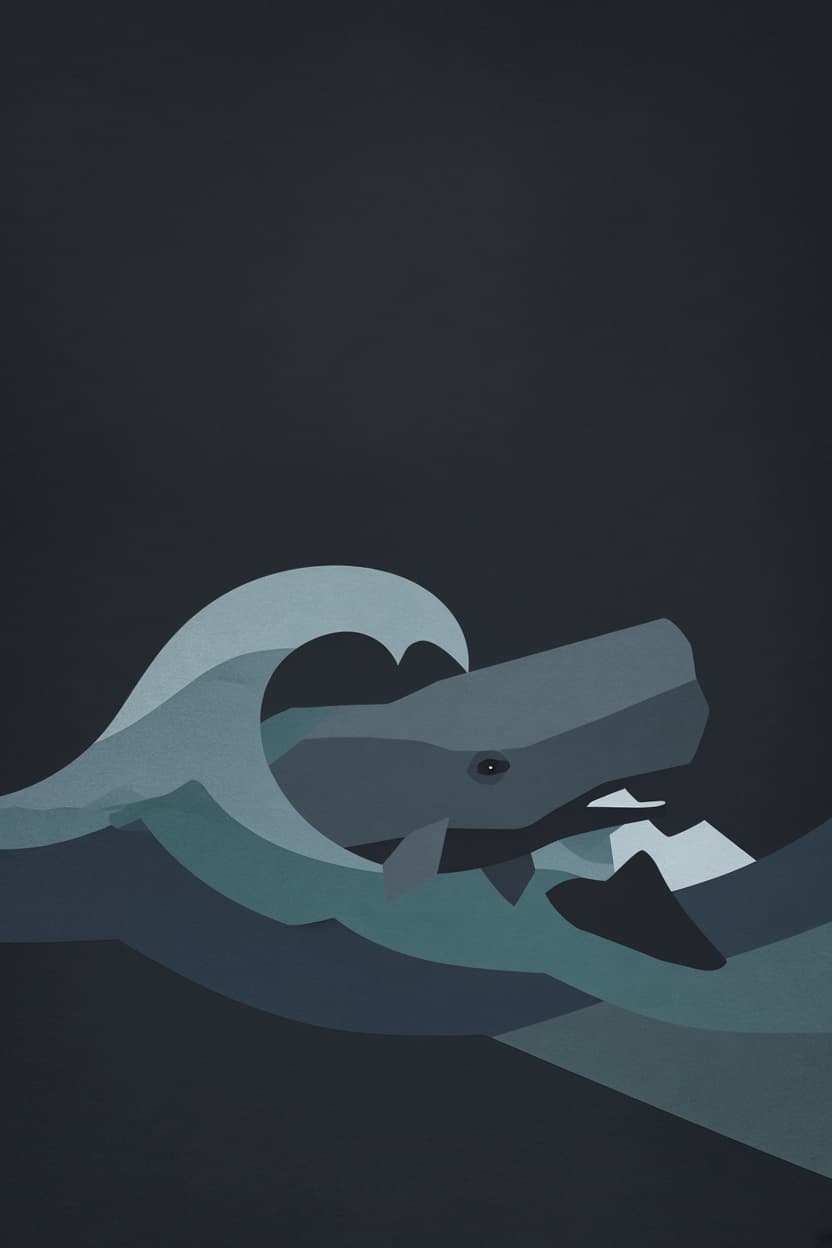
Nathaniel Philbrick reconstructs the true 1820 disaster that inspired Moby-Dick: a Nantucket whaleship rammed and sunk by an enraged sperm whale, followed by ninety days of starvation, cannibalism, and death across the open Pacific. The book argues that the crew's fate was shaped as much by culture, class, and fear of racial otherness as by nature, and it matters because it exposes how a supposedly rational, God-fearing whaling society made a catastrophic navigational choice rooted in prejudice rather than seamanship.
Reading plan
Pick a finish date and Genius lays out the days — the plan shows today's target and keeps you honest.
Read together
Start a circle and share the code — everyone sees everyone's honest place in the book. Accountability, not leaderboards.
Who it's for
- Readers of maritime and survival history who want documented fact rather than novelized adventure - Fans of Moby-Dick curious about the real events Melville drew on - Anyone interested in how group decision-making fails under fear and social pressure
What’s inside
- 1An Island Built on Oil1 min
Nantucket's whaling prosperity depended on a rigid social and religious order that made extreme risk-taking at sea seem ordinary rather than reckless.
- 2An Old Ship, a Green Crew1 min
The Essex was already a marginal vessel before it left port, and its disaster began with choices made on land, not at sea.
- 3The Whale That Fought Back1 min
The whale's attack on the Essex was not a random accident of nature but a deliberate, repeated act that the crew's own hunting practices may have provoked.
- 4The Choice That Sealed Their Fate1 min
The crew's decision to sail for South America instead of the much closer Pacific islands, driven by fear of cannibals, was the single choice that turned a disaster into a catastrophe.
- 5Starvation on the Open Sea1 min
Physical survival under starvation follows a predictable and brutal biological script that determined who died first almost independent of character or will.
- 6The Island That Wasn't Enough1 min
Reaching land did not end the crisis, because the crew's fear of cannibals had already led them to reject the one place that might have saved them without further death.
- 7Drawing Lots1 min
When starvation reached its final stage, the crew turned survival cannibalism into a formalized, consensual system, which Philbrick argues reveals as much about human capacity for order as for horror.
- 8Rescue, Return, and the Long Silence1 min
Survival did not restore the men to normal life, and Nantucket's response to their ordeal reveals a community more interested in preserving its reputation than reckoning with what had happened.
- 9Where the Evidence Runs Thin1 min
Philbrick's reconstruction leans heavily on sources with real limitations, and the book's most striking claims about race, whale intent, and crew psychology rest on inference more than direct proof.
About Nathaniel Philbrick
Nathaniel Philbrick is a historian and former sailor who directed the Egan Maritime Institute on Nantucket. He drew on ship logs, newly discovered survivor manuscripts, and firsthand sailing experience in a whaleboat replica to reconstruct the Essex disaster with unusual physical and nautical precision.