12 min · 11 chaptersNarrated in your voice
Original summary · AI-drafted, human-published · added by Library
What it's about
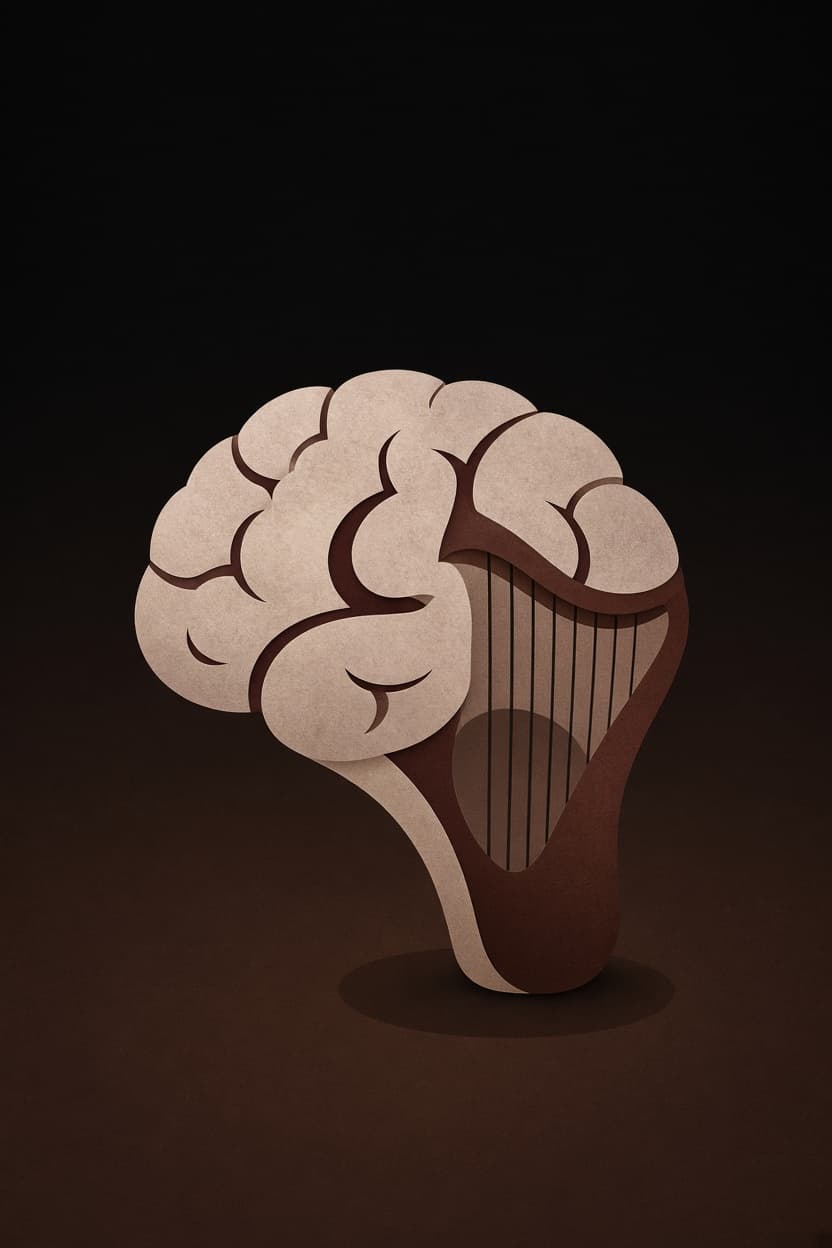
Oliver Sacks argues that music occupies a uniquely powerful and separate place in the human brain, capable of triggering memory, movement, emotion, and identity even when other faculties have collapsed. Through dozens of clinical case histories, he shows music engaging more of the brain than almost any other stimulus, and argues this makes it a therapeutic tool as well as a scientific puzzle. The book mattered because it brought neurology's strangest cases to a general audience and helped legitimize music therapy in clinical practice.
Reading plan
Pick a finish date and Genius lays out the days — the plan shows today's target and keeps you honest.
Read together
Start a circle and share the code — everyone sees everyone's honest place in the book. Accountability, not leaderboards.
Who it's for
- Clinicians and therapists who want case-based evidence for music's effect on damaged brains - General readers curious about the mind who enjoy narrative science writing over textbook explanation - Musicians, caregivers, or family members of people with neurological conditions like Parkinson's, amnesia, or Tourette's
What’s inside
- 1Music as an Involuntary Force1 min
Music can seize the brain against a person's will, proving it is processed by dedicated, largely automatic neural machinery rather than by general-purpose cognition.
- 2Perfect Pitch, Absolute Ears, and the Limits of Talent1 min
Musical ability, including rare gifts like absolute pitch, depends on a combination of innate brain wiring and a narrow developmental window, not effort alone.
- 3Amnesia and the Persistence of Musical Memory1 min
Musical memory can survive catastrophic amnesia, showing that music is stored and retrieved through pathways distinct from the ones that hold ordinary autobiographical memory.
- 4Music and Movement in Parkinson's Disease1 min
Rhythmic music can restore voluntary movement in Parkinson's patients because rhythm engages motor-timing circuits that operate somewhat independently of the dopamine-depleted systems damaged by the disease.
- 5Music as a Route Back to the Self in Dementia1 min
Familiar music can reawaken emotional and personal identity in advanced dementia even after language and recognition of loved ones have been lost.
- 6Earworms, Hallucinations, and the Involuntary Musical Brain1 min
Involuntary musical experiences, from earworms to full hallucinated orchestras, reveal that the brain generates and rehears music internally as a default background process, not only in response to real sound.
- 7Synesthesia, Emotion, and Music's Unique Emotional Channel1 min
Music produces emotional and physiological responses through pathways that bypass ordinary semantic meaning, which is why it can move people who cannot understand or even consciously attend to it.
- 8Music, Identity, and What the Cases Add Up To1 min
Taken together, these cases argue that musical capacity is not a unified skill but a set of separable systems for pitch, rhythm, memory, and emotion, whose relative independence explains both music's fragility in some patients and its astonishing resilience in others.
About Oliver Sacks
Oliver Sacks (1933-2015) was a British neurologist and prolific author who spent decades at Beth Abraham Hospital and Columbia University treating patients with rare neurological conditions. Known for case-history books like Awakenings and The Man Who Mistook His Wife for a Hat, he wrote for general readers while remaining a working clinician, giving his case studies unusual clinical grounding.
What readers say
Read next
An Immense WorldEd YongSummary17 min

IncognitoDavid EaglemanSummary10 min

The Man Who Mistook His Wife for a HatOliver SacksSummary12 min

The Code BreakerWalter IsaacsonSummary13 min

A Brief History of TimeStephen HawkingSummary17 min

Brief Answers to the Big QuestionsStephen HawkingSummary15 min