11 min · 11 chaptersNarrated in your voice
What it's about
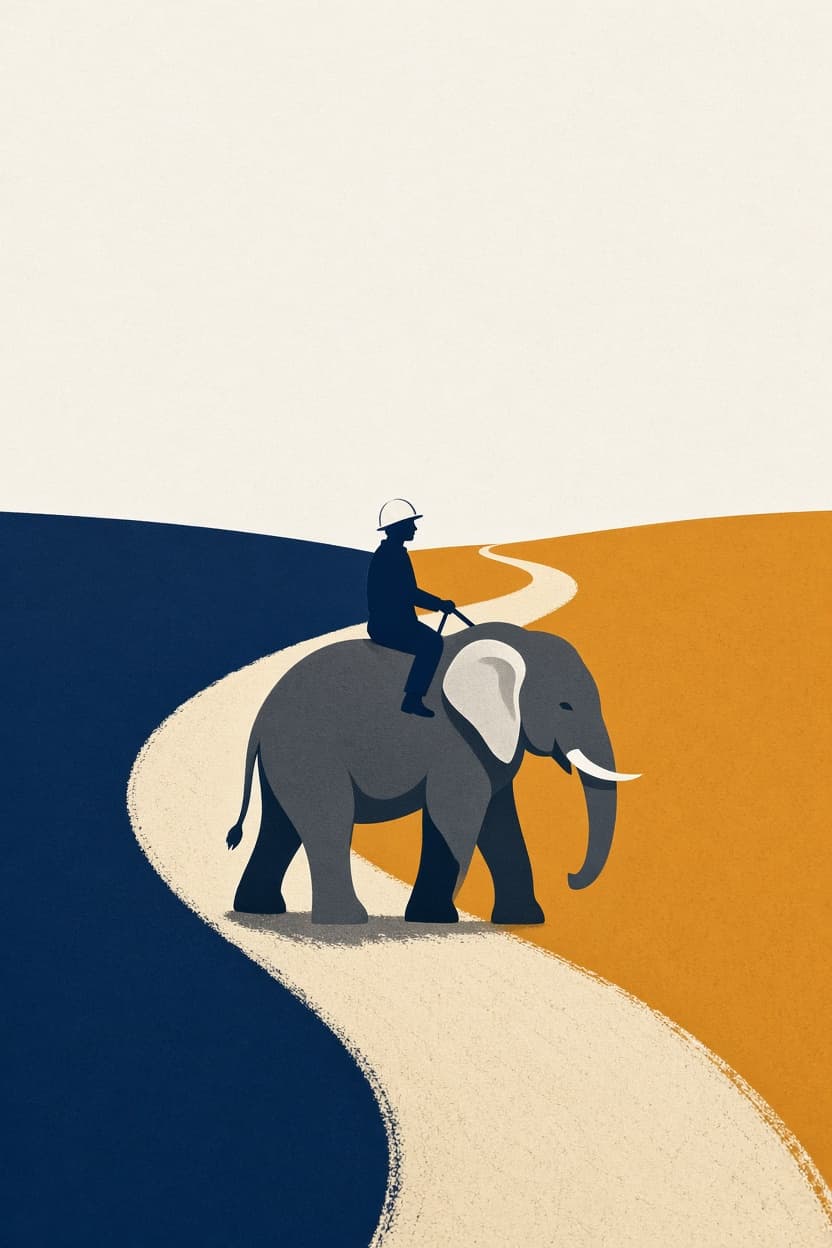
The book argues that change fails not because people are lazy or resistant but because change agents misunderstand human psychology. Using the metaphor of a Rider (rational mind) and an Elephant (emotional mind) journeying together on a Path (the environment), the Heaths show that lasting change requires directing the Rider with clarity, motivating the Elephant with feeling, and shaping the Path so the right behavior becomes easier than the wrong one. It mattered because it translated behavioral science into a practical toolkit for managers, parents, and reformers.
Reading plan
Pick a finish date and Genius lays out the days — the plan shows today's target and keeps you honest.
Read together
Start a circle and share the code — everyone sees everyone's honest place in the book. Accountability, not leaderboards.
Who it's for
- A manager trying to get a team to adopt a new process without relying on mandates alone - A nonprofit or public health worker designing a behavior-change campaign on a limited budget - A parent or individual who keeps failing at personal change and wants to know why willpower alone does not work
What’s inside
- 1The Rider and the Elephant1 min
Most change efforts fail because they address only the rational Rider while ignoring the emotional Elephant that actually supplies the energy for action.
- 2Script the Critical Moves1 min
Vague goals fail because they leave the Rider paralyzed by too many decisions, so successful change requires scripting specific, unambiguous first actions.
- 3Point to the Destination1 min
Along with scripting immediate moves, people need a vivid picture of the end state, because a script alone cannot cover every situation that arises.
- 4Find the Feeling1 min
People do not change because of information; they change because something makes them feel differently, so change agents must engineer emotional experience, not just deliver facts.
- 5Shrink the Change1 min
Big changes feel impossible and trigger the Elephant's fear response, so breaking a change into small, immediately achievable wins builds the confidence needed to sustain momentum.
- 6Grow Your People1 min
Sustained change requires cultivating an identity and growth mindset in people, so that setbacks are interpreted as normal steps in development rather than proof of failure.
- 7Tweak the Environment1 min
Willpower is a poor long-term strategy because it is a depletable resource, so lasting change comes from redesigning the physical or procedural environment to make the desired behavior the default.
- 8Build Habits and Rally the Herd1 min
Change becomes permanent only when it turns into automatic habit and spreads through social proof, because individual willpower and isolated effort cannot sustain change against a whole environment pulling the other way.
About Chip Heath and Dan Heath
Chip Heath is a professor of organizational behavior at Stanford Graduate School of Business. Dan Heath is a senior fellow at Duke University's CASE center for social entrepreneurship. The brothers previously co-wrote Made to Stick, on why ideas spread, and later wrote Decisive and The Power of Moments, all applying research on psychology and decision-making to practical problems.