The Invisible Gorilla
How Our Intuitions Deceive Us
Christopher Chabris and Daniel Simons · 2010 · Psychology
12 min · 11 chaptersNarrated in your voice
What it's about
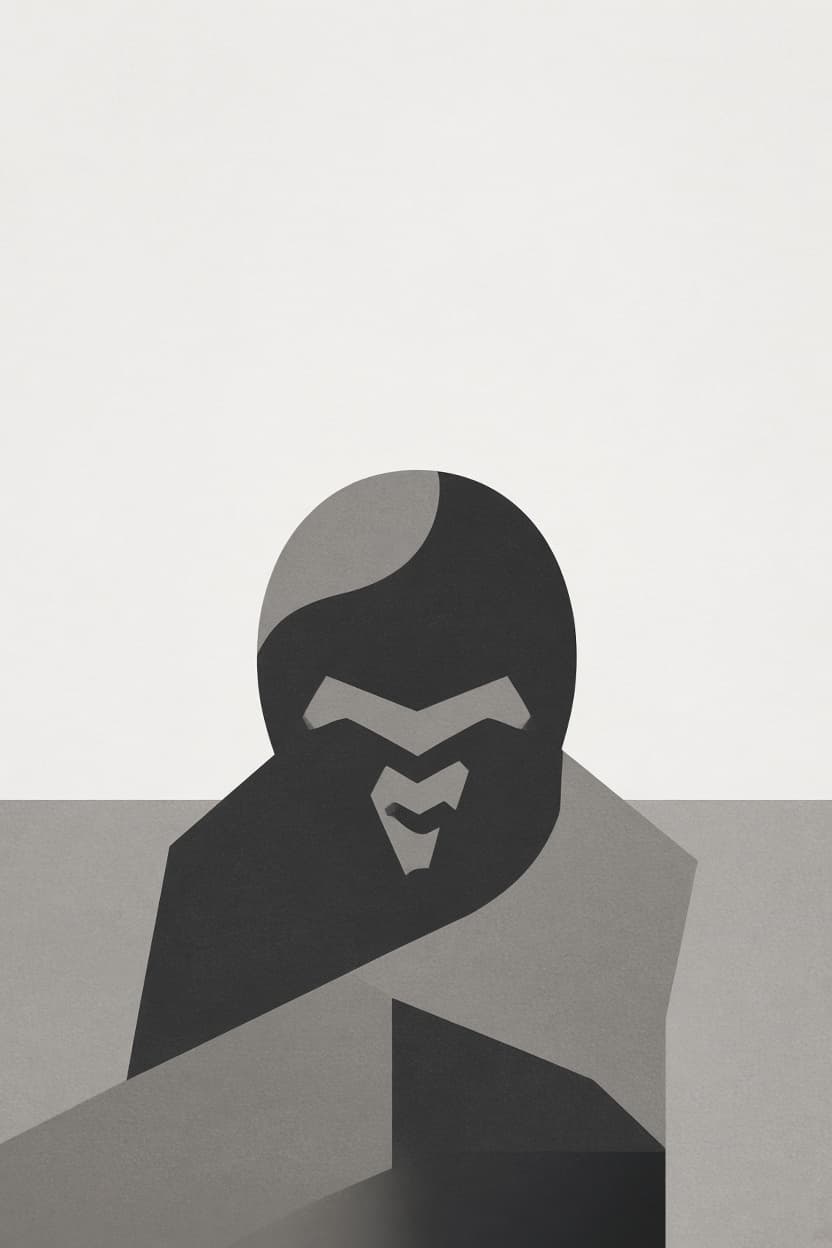
Chabris and Simons argue that people systematically overestimate the reliability of their own minds. Drawing on their famous gorilla experiment and decades of cognitive research, they identify six everyday illusions—of attention, memory, confidence, knowledge, cause, and potential—that make us trust perceptions and judgments far more than the evidence warrants. The book mattered because it translated academic psychology into a public reckoning with overconfidence, reshaping how courts, doctors, and ordinary readers think about eyewitness testimony, multitasking, and expertise.
Reading plan
Pick a finish date and Genius lays out the days — the plan shows today's target and keeps you honest.
Read together
Start a circle and share the code — everyone sees everyone's honest place in the book. Accountability, not leaderboards.
Who it's for
- Anyone who has ever argued they 'definitely would have noticed' something unusual happening right in front of them - Managers, jurors, or clinicians who rely on eyewitness accounts, self-reports, or gut confidence to make decisions - Readers curious about the actual research behind viral psychology claims like the cocktail party effect or the 10,000-hour rule
What’s inside
- 1The Gorilla in the Room1 min
People are so confident in their ability to notice unexpected events that they will insist something didn't happen even when it happened right in front of them.
- 2The Illusion of Attention Beyond the Lab1 min
Real-world tasks like driving while talking on a phone fail for the same structural reason the gorilla goes unseen, not because phones are uniquely distracting.
- 3The Illusion of Memory1 min
Vivid, confident memories, including flashbulb memories of major public events, are reconstructed at the moment of recall and are often factually wrong.
- 4The Illusion of Confidence1 min
Confident-seeming behavior is systematically overweighted as a sign of competence, even though the two are only weakly related.
- 5The Illusion of Knowledge1 min
People routinely believe they understand how everyday things work in far more detail than they actually can explain, a gap that only shows up when they try to produce the explanation.
- 6The Illusion of Cause1 min
Humans are so quick to infer causation from correlation or coincidence that plausible-sounding causal stories, like the vaccine-autism link, can persist long after being disproven.
- 7The Illusion of Potential1 min
Claims that early brain training, background music, or small interventions can produce large, durable gains in general intelligence or ability are almost always overstated relative to the actual evidence.
- 8Living With Unreliable Minds1 min
Because these illusions cannot be eliminated through willpower or awareness alone, the only real defense is designing systems and habits that don't depend on trusting unaided intuition.
About Christopher Chabris and Daniel Simons
Christopher Chabris is a cognitive scientist and professor who has worked at Union College and Geisinger Health System. Daniel Simons is a professor of psychology at the University of Illinois. Together they designed the 1999 'invisible gorilla' experiment, one of the most replicated studies in attention research, and both publish widely on perception, memory, and reasoning errors.