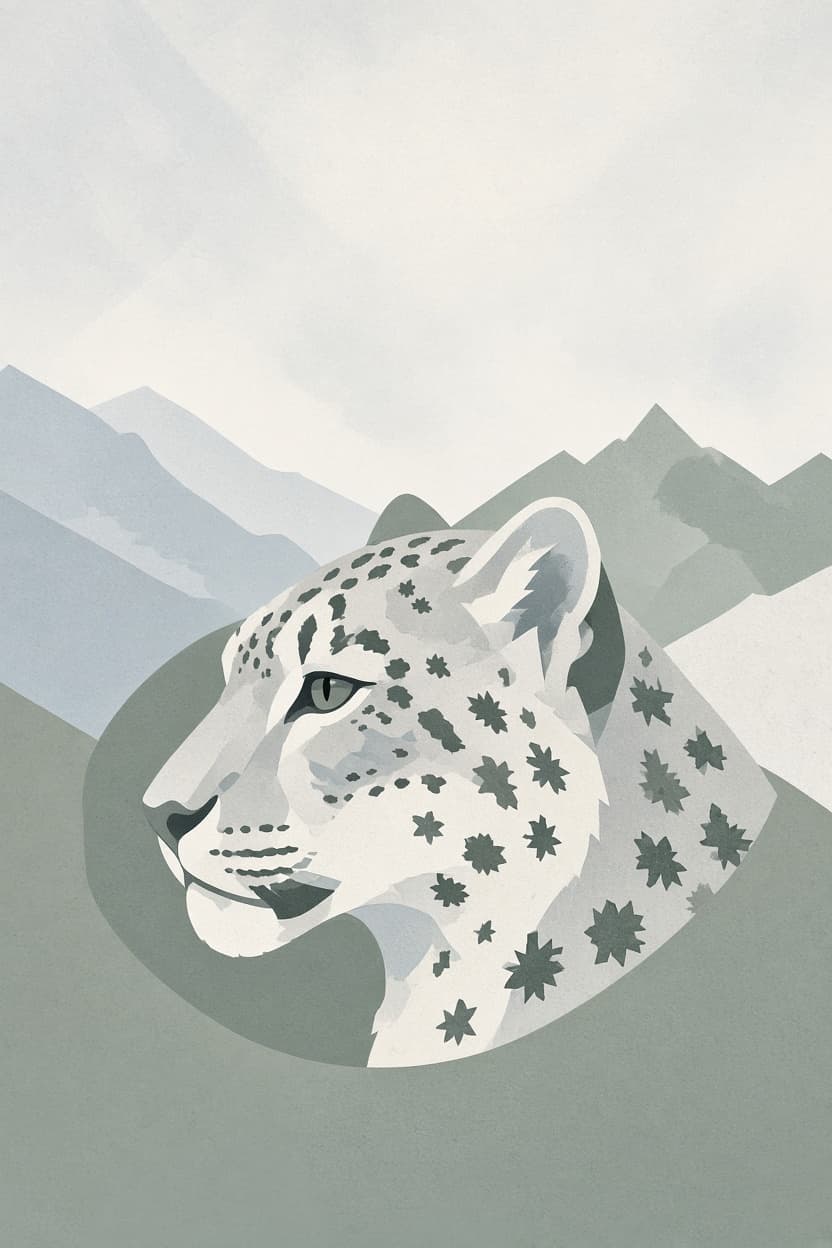
The Snow Leopard
A Journey Through the Himalaya in Search of a Rare Animal and an Elusive Peace
Peter Matthiessen · 1978 · Nature
12 min · 11 chaptersNarrated in your voice
Original summary · AI-drafted, human-published · added by Library
What it's about
Peter Matthiessen recounts a 1973 trek into Nepal's remote Dolpo region with zoologist George Schaller, ostensibly to study Himalayan blue sheep and glimpse the nearly mythical snow leopard. Underneath the natural history lies a grief journey: Matthiessen's wife had recently died of cancer, and he was practicing Zen Buddhism. The book matters because it fused travel writing, science, and spiritual memoir into a single honest account of searching for something that may never be found, and asking whether the search itself was ever really the point.
Reading plan
Pick a finish date and Genius lays out the days — the plan shows today's target and keeps you honest.
Read together
Start a circle and share the code — everyone sees everyone's honest place in the book. Accountability, not leaderboards.
Who it's for
- Readers processing grief who want a model for facing loss without tidy resolution - Buddhist practitioners or the Buddhist-curious interested in how meditation holds up under real physical hardship - Travel and nature writers who want a template for blending hard science with interior reflection
What’s inside
- 1A Trip With Two Purposes1 min
The expedition's stated scientific goal (tracking blue sheep) is real, but it is also a cover story for a much less answerable personal mission, and the book only works if you read both at once.
- 2The Body as the First Teacher1 min
Sustained physical hardship at altitude does more to loosen the grip of anxious thought than any amount of seated meditation, because the body simply runs out of spare attention to spend on worry.
- 3Schaller and the Discipline of Just Looking1 min
Schaller's scientific detachment, watching animals for hours without projecting meaning onto them, models a form of non-attachment that arguably out-performs Matthiessen's more overt Buddhist vocabulary.
- 4The Crystal Monastery and the Lama of Shey1 min
Encountering a Buddhist teacher in extreme physical circumstances reveals wisdom as something demonstrated by how a life is lived under limitation, not something transmitted by doctrine.
- 5Looking for What You Will Probably Not Find1 min
The snow leopard's near-total invisibility throughout the book is the book's central argument: that the value of a serious search does not depend on the search succeeding.
- 6Grief That Does Not Resolve on Schedule1 min
Matthiessen's mourning for his wife does not follow a redemptive arc inside the book, and the narrative's refusal to manufacture closure is more honest than a cleaner ending would have been.
- 7Tukten and the Question of Who Is Teaching Whom1 min
Matthiessen repeatedly frames a Sherpa porter, Tukten, as a possible hidden teacher, a projection that says more about the author's spiritual hunger than about Tukten himself.
- 8Coming Down the Mountain Empty-Handed1 min
The trip ends without the snow leopard, without full resolution of grief, and without a clean spiritual attainment, and the book argues that this triple non-arrival is the most truthful possible ending.
About Peter Matthiessen
Peter Matthiessen (1927–2014) was an American novelist, naturalist, and co-founder of The Paris Review. A committed Zen practitioner ordained late in life as a roshi, he wrote both fiction and nonfiction on wilderness, indigenous peoples, and spiritual seeking, and remains the only writer to win the National Book Award in both fiction and nonfiction.
What readers say
Read next

Animal, Vegetable, MiracleBarbara KingsolverSummary11 min

The Soul of an OctopusSy MontgomerySummary13 min

The Perfect StormSebastian JungerSummary10 min
Desert SolitaireEdward AbbeySummary12 min

Pilgrim at Tinker CreekAnnie DillardSummary14 min

The Botany of DesireMichael PollanSummary12 min