11 min · 11 chaptersNarrated in your voice
What it's about
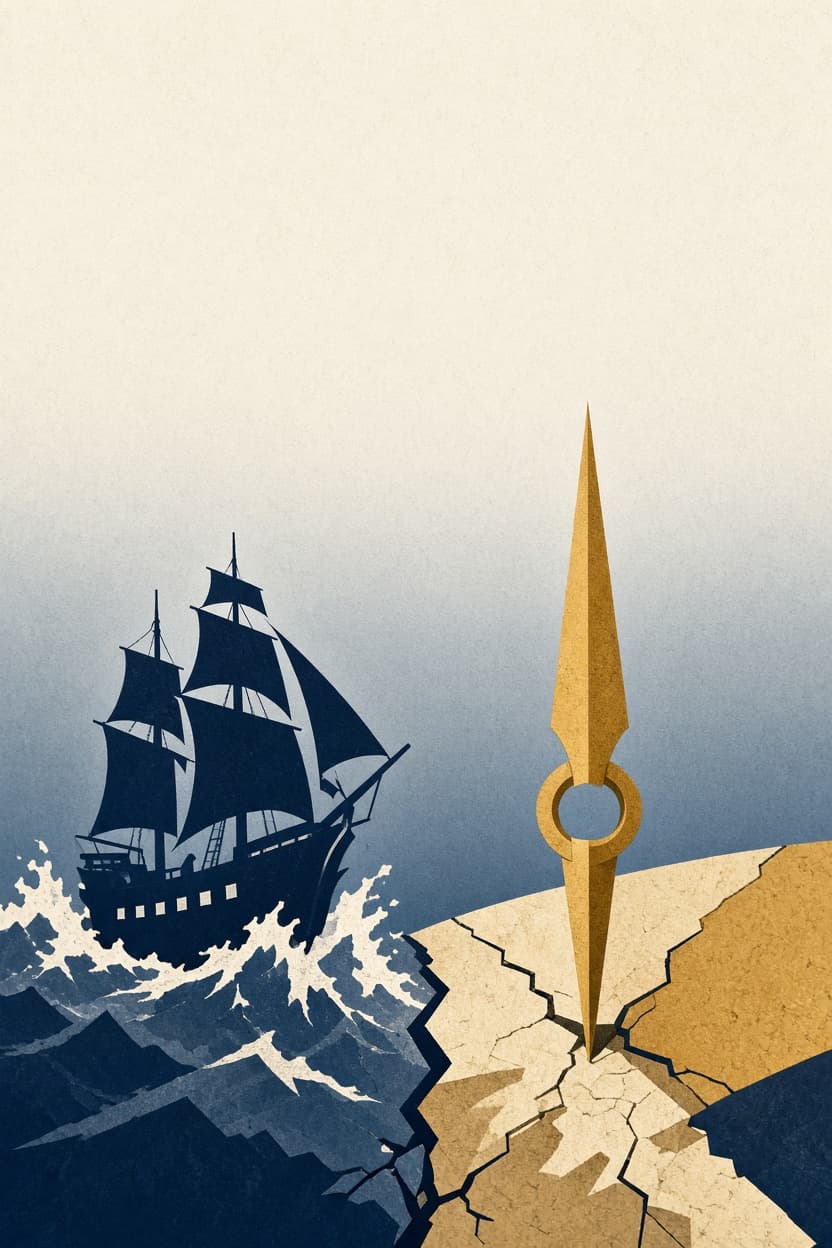
David Grann reconstructs the 1741 wreck of the British warship Wager off Patagonia and the survivors' fractured, competing accounts of what happened next. The book argues that history is written by whoever controls the story, and that the veneer of naval order and imperial glory concealed brutality, starvation, and near-total social collapse. It mattered because it used one obscure disaster to expose how empires manufacture heroic narratives from chaos.
Reading plan
Pick a finish date and Genius lays out the days — the plan shows today's target and keeps you honest.
Read together
Start a circle and share the code — everyone sees everyone's honest place in the book. Accountability, not leaderboards.
Who it's for
- Readers who enjoy narrative nonfiction built from archival detective work - People interested in the British Empire's underside during the eighteenth century - Anyone drawn to survival stories where the real drama is who gets believed afterward
What’s inside
- 1The Empire's Gamble1 min
Britain's 1740 expedition against Spain was less a coherent military plan than a reckless bid for plunder dressed up as strategy.
- 2Wrecked on a Forgotten Island1 min
The wreck of the Wager stripped away naval hierarchy almost instantly, revealing how thin the line is between orderly command and bare survival.
- 3A Captain's Authority Turns Violent1 min
When Cheap killed midshipman Henry Cozens over a dispute about stolen food, he revealed that his command rested on force rather than consent, and lost what legitimacy he still had.
- 4The Mutiny That Wasn't Called One1 min
Bulkeley's decision to abandon Cheap's command was mutiny in substance, but the men reframed it as a lawful response to a wrecked ship, showing how survivors write their own legal cover in advance.
- 5Bulkeley's Voyage Through the Strait1 min
Bulkeley's crossing of the Strait of Magellan in an overloaded, homemade boat succeeded only because the group abandoned some of its own men, proving that survival and moral compromise traveled together.
- 6Cheap and Byron's Reliance on Indigenous Aid1 min
The stranded officers survived largely because of the Kawésqar and Chono peoples who guided and fed them, a debt the British accounts acknowledge only grudgingly and never repay.
- 7Two Ships, Two Stories, One Court1 min
When the surviving factions returned to England years apart with irreconcilable accounts, the Admiralty's decision not to prosecute anyone shows that institutions protect their own legitimacy over establishing truth.
- 8What the Wreck Exposes About Empire and Memory1 min
The Wager's true significance is that it shows official history as a negotiated settlement between competing self-interested storytellers, not a neutral record of events.
About David Grann
David Grann is a staff writer for The New Yorker and author of Killers of the Flower Moon and The Lost City of Z. He specializes in meticulously researched narrative nonfiction, mining court records, ship logs, and firsthand journals to reconstruct historical events later obscured by official accounts.