11 min · 10 chaptersNarrated in your voice
Original summary · AI-drafted, human-published · added by Library
What it's about
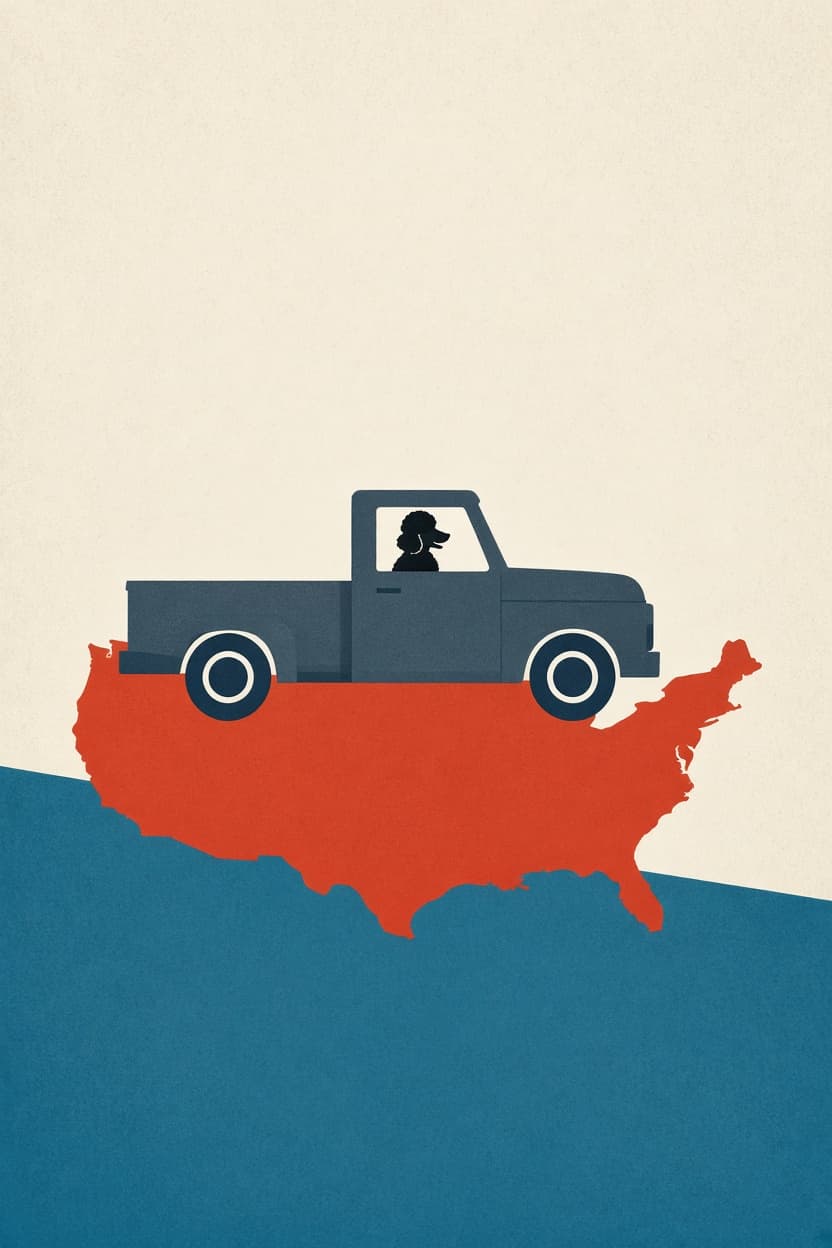
In 1960, at fifty-eight, John Steinbeck drove a customized pickup truck named Rocinante around the perimeter of the United States with his standard poodle Charley, trying to reacquaint himself with a country he felt he had lost touch with as a famous, sedentary writer. The book argues that national character cannot be understood from a desk in New York, and that firsthand encounter, however partial and impressionistic, still tells you something true that surveys and headlines cannot.
Reading plan
Pick a finish date and Genius lays out the days — the plan shows today's target and keeps you honest.
Read together
Start a circle and share the code — everyone sees everyone's honest place in the book. Accountability, not leaderboards.
Who it's for
- Readers who love travel writing that doubles as social observation rather than itinerary - American readers curious how the country's regional character and anxieties looked at the start of the 1960s - Writers and journalists interested in how a famous author handled aging, doubt, and the ethics of reporting on ordinary people
What’s inside
- 1The Itch to Go1 min
A writer who stops moving through his own country loses the authority to write about it, no matter how much he has already written.
- 2Leaving Comfort Behind1 min
Genuine observation requires giving up the protections of status, itinerary, and control, which is harder for a famous person than it sounds.
- 3Small Talk as Data1 min
Casual, unplanned conversation with strangers is a more reliable gauge of a region's mood than official statements or media coverage.
- 4The Land Itself as Character1 min
American identity is inseparable from the physical landscape people inhabit, and the country's regional differences run deeper than dialect or cuisine.
- 5The Weight of the Past in the South1 min
Steinbeck argues that the South's resistance to desegregation in 1960 was not merely political but a symptom of geography, memory, and a losing region defending its last stronghold of certainty.
- 6Fatigue and the Limits of the Method1 min
Steinbeck's own account suggests that long-form immersive travel eventually degrades the observer's judgment rather than sharpening it.
- 7Coming Home Blind1 min
The final test of the journey is not what Steinbeck saw on the road but whether he could still recognize home, and he fails that test in a way that undercuts the whole enterprise's premise.
About John Steinbeck
John Steinbeck (1902-1968) was an American novelist and Nobel laureate best known for The Grapes of Wrath, Of Mice and Men, and East of Eden. A Californian by birth who spent much of his career writing about migrant workers, small towns, and the American land, he undertook this trip near the end of his life, partly to test whether he still knew the country he had spent decades writing about.