10 min · 9 chaptersNarrated in your voice
What it's about
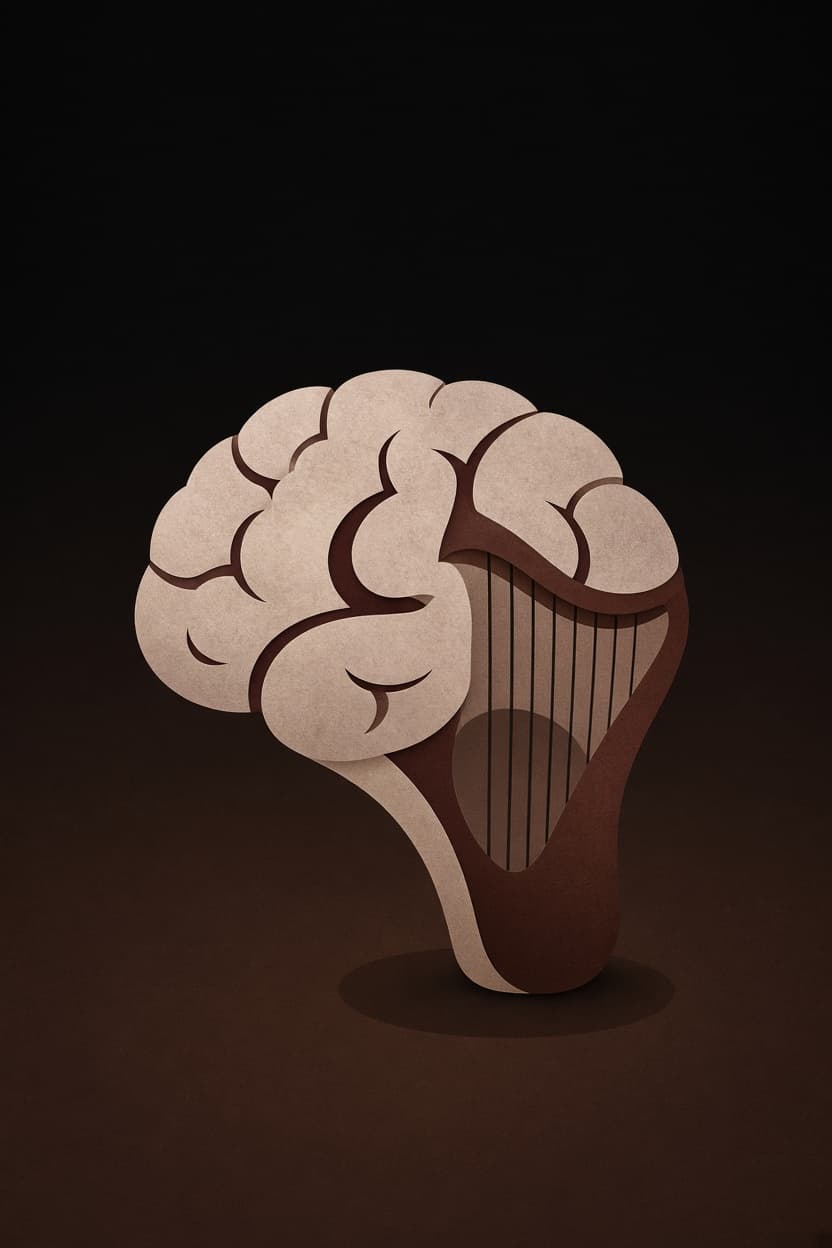
Eagleman argues that the brain is not a fixed piece of hardware running programs but a dynamically reconfiguring system that rewires itself in response to the data it receives. He proposes the term 'livewired' to replace 'hardwired,' showing how competition for neural territory, not a genetic blueprint, drives brain development, recovery from injury, and even the design of future sensory devices. The book mattered because it reframed neuroscience away from strict localization toward a competitive, plastic model with real implications for medicine and technology.
Reading plan
Pick a finish date and Genius lays out the days — the plan shows today's target and keeps you honest.
Read together
Start a circle and share the code — everyone sees everyone's honest place in the book. Accountability, not leaderboards.
Who it's for
- Readers curious about how brain injury patients recover functions doctors once thought were permanently lost - Engineers and technologists interested in sensory substitution devices and brain-machine interfaces - Students of psychology or neuroscience who want a plasticity-centered alternative to textbook localization models
What’s inside
- 1The Myth of Hardwiring1 min
The brain's structure is not fixed by genes but is largely determined by a competitive process that adapts to whatever input it happens to receive.
- 2Competition for Territory1 min
Neurons and brain regions survive and expand by actively competing for input and relevance, not by executing a predetermined program.
- 3Recovery After Injury1 min
The brain routes around damage by reassigning tasks to healthy tissue, meaning recovery potential is often underestimated by traditional prognosis models.
- 4Sensory Substitution1 min
The brain does not care which sense channel delivers information, meaning devices can route entirely new data streams through unused sensory pathways.
- 5Expanding the Sensorium1 min
Human senses are not a fixed biological endowment but an arbitrary set that technology can deliberately expand beyond what evolution provided.
- 6Critical Periods and the Limits of Plasticity1 min
Plasticity is not unlimited or ageless; the brain's capacity to rewire itself is governed by developmental windows that make some changes far easier early in life than later.
About David Eagleman
David Eagleman is a neuroscientist at Stanford University who studies brain plasticity, time perception, and sensory substitution. He founded Neosensory, a company building wearable devices that translate sound and other data into vibrational patterns for the skin. He has written several popular science books and hosted the PBS series The Brain.