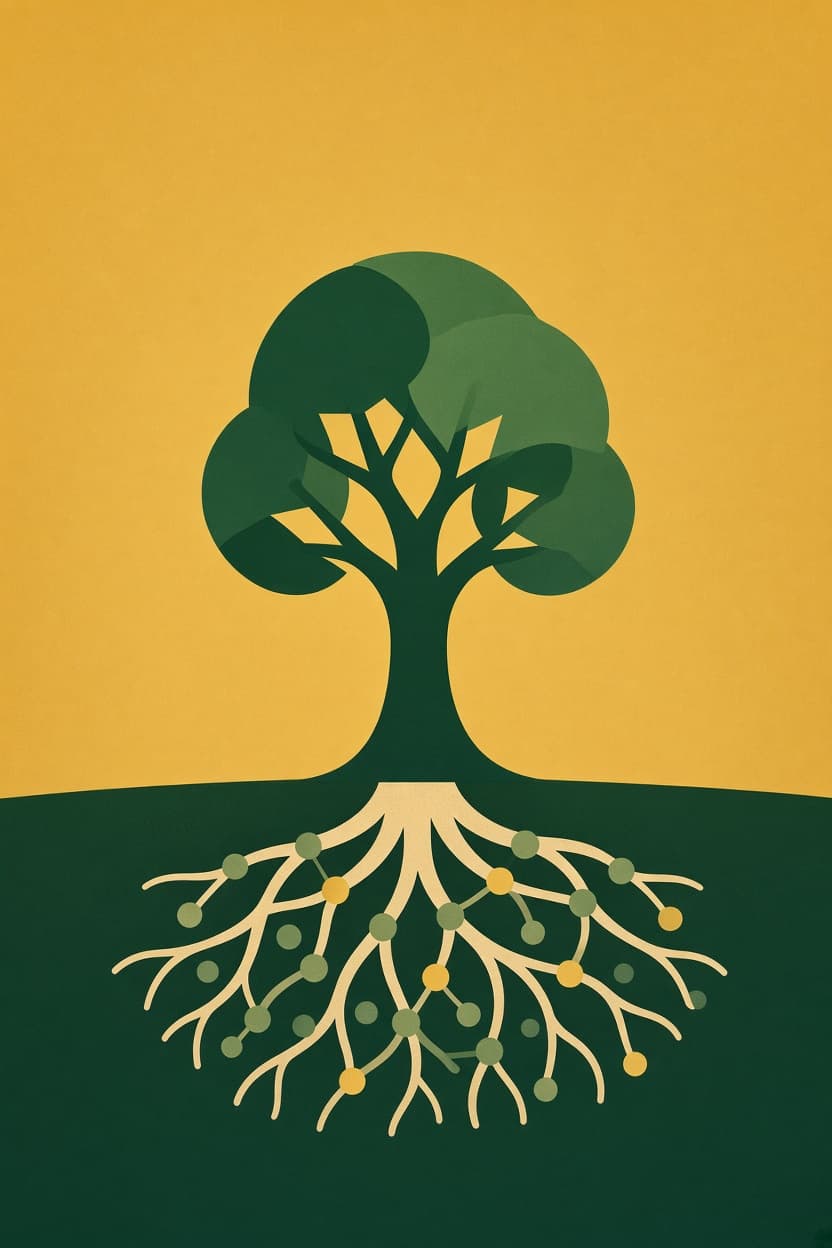
The Hidden Life of Trees
What They Feel, How They Communicate—Discoveries from a Secret World
Peter Wohlleben · 2015 · Nature
9 min · 10 chaptersNarrated in your voice
What it's about
Peter Wohlleben, a German forester, argues that trees are far more socially organized and responsive than commonly assumed. Drawing on his own forest management and emerging plant science, he claims trees communicate through chemical signals and root networks, share resources with kin, and exhibit something like memory and self-protection. The book mattered because it reframed forests as communities rather than collections of separate organisms, reaching a mass audience and pushing forestry and ecology debates into popular consciousness.
Reading plan
Pick a finish date and Genius lays out the days — the plan shows today's target and keeps you honest.
Read together
Start a circle and share the code — everyone sees everyone's honest place in the book. Accountability, not leaderboards.
Who it's for
- Hikers and gardeners who want a new way of looking at the woods they walk through - Readers of popular science curious about plant behavior and communication - People weighing conventional forestry and land management against ecological alternatives
What’s inside
- 1Trees Live in Communities, Not Isolation1 min
A forest functions less like a collection of competing individuals and more like a cooperative system where trees actively support each other's survival.
- 2Underground Networks Move Nutrients and Signals1 min
Root systems and fungal networks form an information and resource-sharing infrastructure that behaves like a rudimentary nervous system for the forest.
- 3Chemical Warning Systems Deter Predators1 min
Trees defend themselves and warn each other of insect attack through airborne and root-transmitted chemical signals, a claim with real but contested scientific support.
- 4Trees Have Something Like Memory and Learning1 min
Trees can retain physiological traces of past stress—drought, injury, cold—that change how they respond to future events, which functions like a rudimentary memory.
- 5Species Differ Sharply in Social Behavior and Strategy1 min
Not all trees behave the same way—species vary enormously in their reliance on community, and this variation itself is evidence of the community concept, not a refutation of it.
- 6Age, Growth Rate, and the Deception of Rings1 min
Slow growth is not weakness but often the sign of a resilient, well-integrated tree, which challenges the intuition that bigger and faster is healthier.
- 7Human Forestry Interrupts the Forest's Natural Logic1 min
Standard commercial forestry, by prioritizing timber yield and single-species stands, actively undermines the cooperative systems that make forests resilient, and this is a policy failure as much as a scientific one.
About Peter Wohlleben
Peter Wohlleben spent over twenty years managing a forestry district in Germany before shifting toward conservation-oriented forest management. He runs a forest academy and has written multiple bestselling books on nature. His authority rests on decades of hands-on observation rather than laboratory research, which shapes both the book's vividness and its limits.