The Mind-Gut Connection
How the Hidden Conversation Within Our Bodies Impacts Our Mood, Our Choices, and Our Overall Health
Emeran Mayer · 2016 · Health & Fitness
12 min · 11 chaptersNarrated in your voice
Original summary · AI-drafted, human-published · added by Library
What it's about
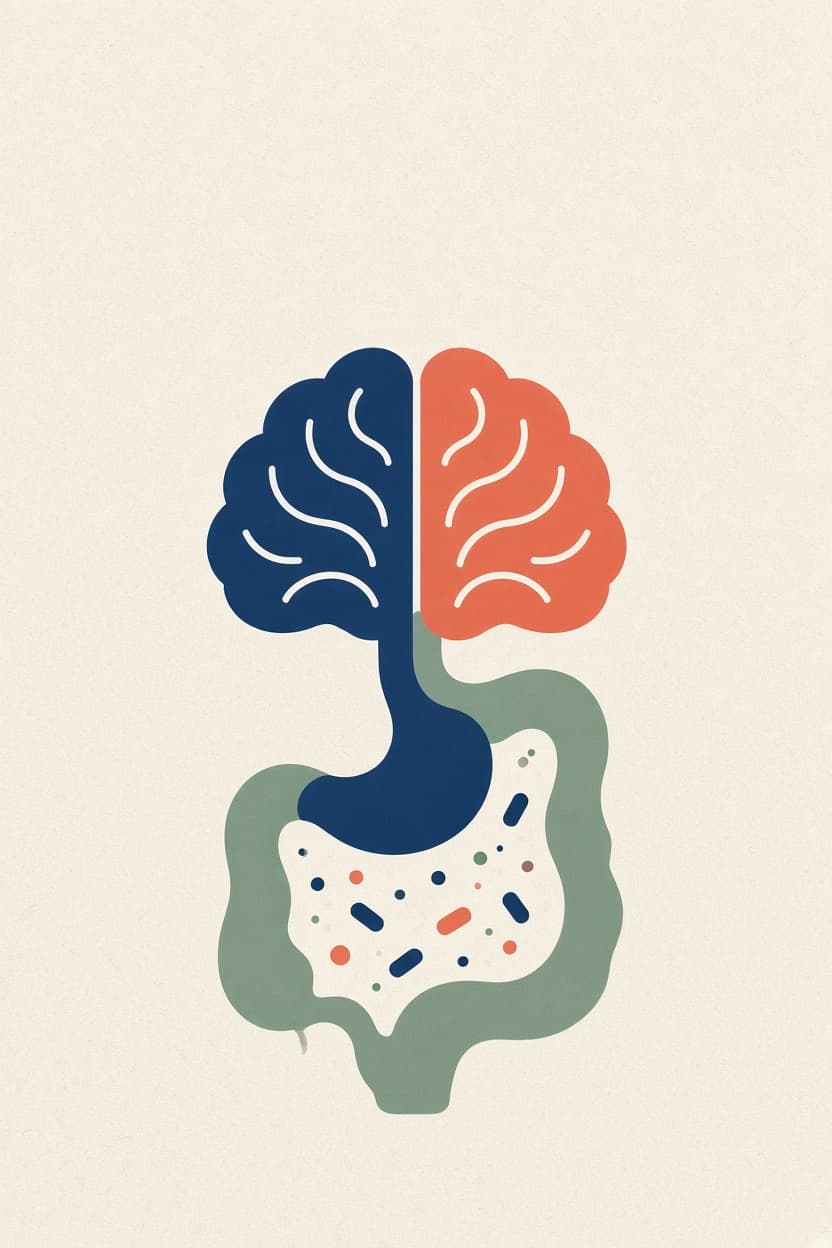
Emeran Mayer argues that the gut and brain form a single, bidirectional system, linked by nerves, hormones, immune signals, and trillions of resident microbes. Digestion, mood, and even personality traits are shaped by this constant cross-talk, not by the brain acting alone. Published in 2016, the book helped move gut-brain and microbiome science from specialist journals into mainstream conversation, reframing conditions like IBS, anxiety, and obesity as disorders of a whole-body system rather than isolated organ failures.
Reading plan
Pick a finish date and Genius lays out the days — the plan shows today's target and keeps you honest.
Read together
Start a circle and share the code — everyone sees everyone's honest place in the book. Accountability, not leaderboards.
Who it's for
- Someone with recurring digestive symptoms who wants to understand why stress makes them worse - A general reader curious about the microbiome who wants a scientifically grounded, non-hype introduction - Anyone who wants to understand the biology behind intuition, cravings, and diet's effect on mood
What’s inside
- 1A Second Brain in the Belly1 min
The gut contains its own semi-autonomous nervous system sophisticated enough to be called a second brain, challenging the idea that thought and bodily control reside only in the skull.
- 2The Two-Way Highway: Vagus Nerve and Beyond1 min
Because most of the traffic on the vagus nerve runs from gut to brain rather than brain to gut, the belly may shape mood more than the mind shapes the belly.
- 3Trillions of Tenants: The Microbiome as Organ1 min
The gut microbiome behaves like a distinct organ system that actively participates in regulating brain chemistry, not merely a passive population of digestive helpers.
- 4Early Life Sets the Microbial Blueprint1 min
The first years of life, especially birth mode and early stress exposure, calibrate the gut-brain relationship in ways that persist for decades.
- 5Gut Feelings as Literal Signals1 min
What people call intuition or a gut feeling is a real, traceable stream of visceral data that the brain incorporates into emotion and decision-making, not a mere figure of speech.
- 6Stress, Leaky Gut, and Chronic Illness1 min
Chronic psychological stress physically alters the permeability of the gut lining, creating a feedback loop that can worsen both digestive and mood disorders together rather than separately.
- 7Diet as the Great Microbiome Lever1 min
What people eat is the single most powerful available tool for reshaping the microbiome, and through it, gut-generated signals to the brain, more than any drug or supplement currently offers.
- 8Rethinking Mental and Metabolic Disease Through the Gut1 min
Conditions long treated as purely brain-based, like depression, or purely metabolic, like obesity, may have gut-microbiome contributions, though the evidence for causation in humans remains far weaker than in animal models.
About Emeran Mayer
Emeran Mayer is a physician-scientist and professor of medicine at UCLA, where he directs the G. Oppenheimer Center for Neurobiology of Stress and Resilience. He has spent over three decades studying the enteric nervous system, irritable bowel syndrome, and stress physiology, bridging clinical gastroenterology with neuroscience research on gut-brain signaling.