9 min · 11 chaptersNarrated in your voice
Original summary · AI-drafted, human-published · added by Library
What it's about
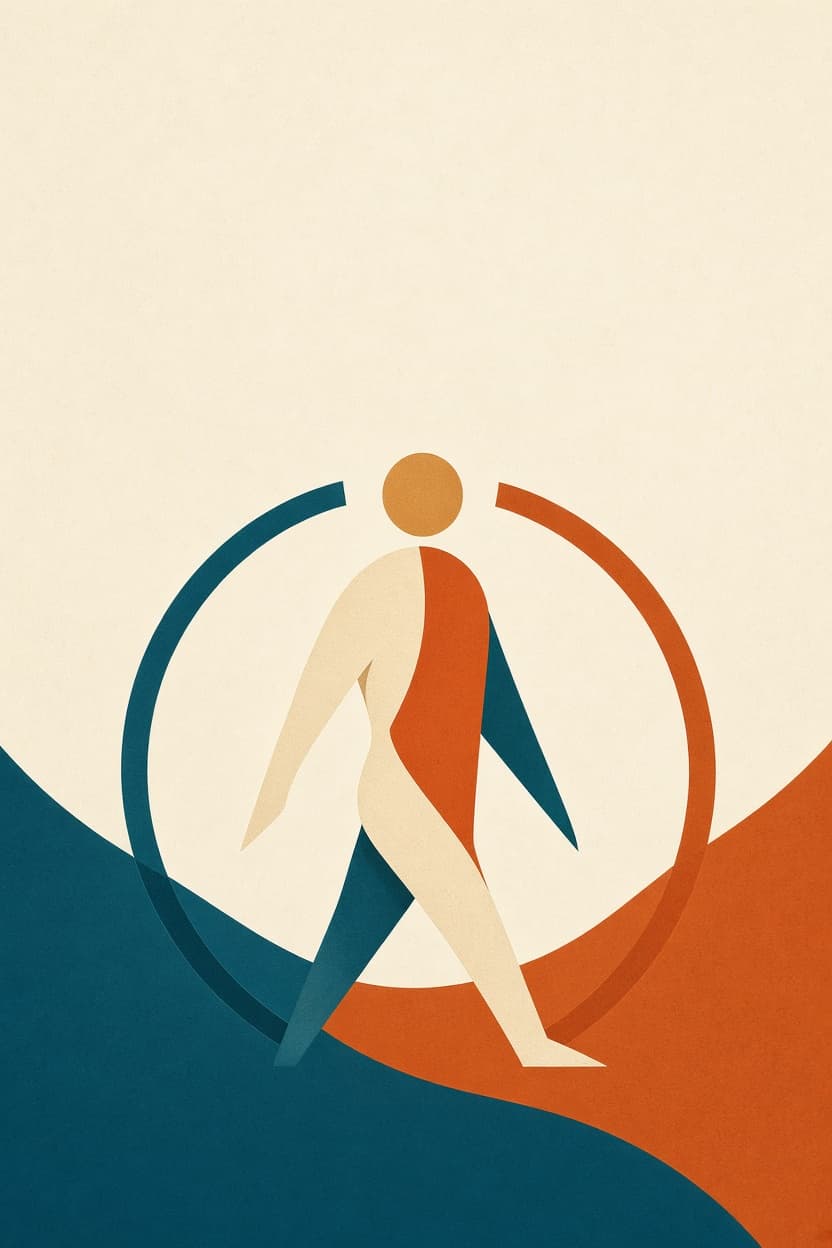
Daniel Lieberman traces four million years of human evolution—from upright walking to endurance running to farming to factories—to explain why bodies shaped by Paleolithic pressures now suffer diseases almost unknown to our ancestors. His central claim is that culture changes faster than genes, producing systematic mismatches between old bodies and new environments, and that most modern chronic disease is the result. The book mattered because it reframed obesity, diabetes, and back pain as evolutionary problems, not just medical or willpower failures.
Reading plan
Pick a finish date and Genius lays out the days — the plan shows today's target and keeps you honest.
Read together
Start a circle and share the code — everyone sees everyone's honest place in the book. Accountability, not leaderboards.
Who it's for
- Readers who want to understand why diabetes, obesity, and back pain became common only in the last century - People curious about human origins who want the science grounded in anatomy and fossils, not speculation - Anyone designing health policy, diet, or exercise advice who wants an evolutionary rationale for it
What’s inside
- 1Standing Up: The Origins of Bipedalism1 min
Walking upright evolved primarily as an energy-saving adaptation to increasingly open, seasonal African habitats, not mainly for tool use or heat regulation.
- 2Big Brains and Small Guts1 min
The energetically expensive human brain could only grow because meat-eating and eventually cooking shrank the gut and freed up metabolic budget elsewhere.
- 3Born to Run1 min
Homo erectus evolved a specific suite of traits for endurance running, not just walking, most plausibly to pursue persistence hunting in the heat of the African savanna.
- 4The Agricultural Paradox1 min
Farming, despite enabling explosive population growth, made individual human bodies measurably less healthy than they had been as foragers.
- 5Industrialization Compounds the Mismatch1 min
The industrial revolution did not correct agriculture's health costs; it layered new mismatches—processed food, mechanized labor, sedentism—on top of the old ones.
- 6Dysevolution: When Culture Makes Mismatch Worse1 min
Cultural buffering of a mismatch disease's symptoms, rather than its causes, can allow the underlying problem to spread and worsen across generations—a process Lieberman calls dysevolution.
- 7The Diseases of Mismatch1 min
Most of the modern world's leading chronic diseases share a common evolutionary cause—energy surplus and unfamiliar inputs colliding with metabolisms built for scarcity—rather than being separate problems with separate causes.
- 8Rethinking Prevention: Exercise, Diet, and Evolutionary Medicine1 min
Public health and medicine would do more good by designing environments and habits that restore ancestral patterns of activity and diet than by continuing to treat mismatch diseases after they appear.
About Daniel E. Lieberman
Daniel E. Lieberman is a professor of human evolutionary biology at Harvard University, where he has chaired the department. His research spans fossil anatomy, biomechanics, and the evolution of running, including influential studies on barefoot and minimalist running gait that made him a prominent voice connecting paleoanthropology to modern health science.
What readers say
Read next
An Immense WorldEd YongSummary17 min

IncognitoDavid EaglemanSummary10 min
MusicophiliaOliver SacksSummary12 min

The Code BreakerWalter IsaacsonSummary13 min

A Brief History of TimeStephen HawkingSummary17 min

Brief Answers to the Big QuestionsStephen HawkingSummary15 min